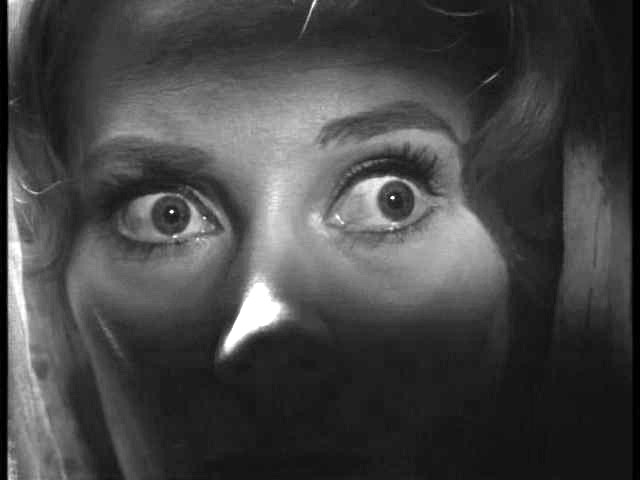
Saturday, September 25, 2010

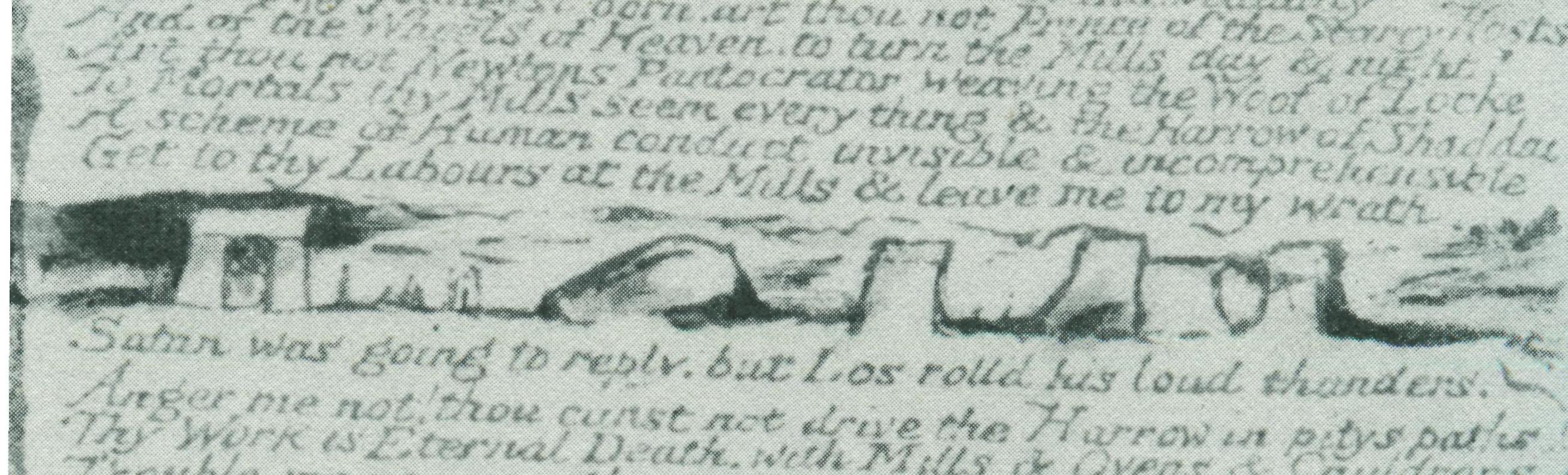
William Blake: Get to thy Labours at the Mills


.

Cotton Compress, Wilmington, N.C.

Cotton compress, Wilmington, North Carolina: postcard (detail), c. 1905-1915 (Durwood Barbour Collection, Wilson Library, University of North Carolina at Chapel Hill)


File:Satanic mills.jpg

Milton: A Poem: William Blake, c. 1809


L.S. Lowry Industrial Landscape 1955

Industrial Landscape
: L.S. Lowry, 1955 (Tate Collection)

Cotton Mill Towns: Owner and Workers


.

Image, Source: digital file from original neg.

R.B. Whitley, who was one of the first citizens of the town and is one of its leading citizens, owner of the general store, president of the bank, and owns a cotton mill nearby and a farm. He is a big land owner, owns Whitley-Davis farm and a cotton mill in Clayton. He said he cut down the trees and pulled the stumps out of the main street, and was the first man in that town of Wendell, Wake County, North Carolina: photo by Marion Post Wolcott, September 1939

Image, Source: intermediary roll film

Operator repairing break in thread in warp winding, Laurel Cotton Mill, Laurel, Mississippi: photo by Russell Lee, January 1939

Image, Source: intermediary roll film

Operator of spool winding machine making knot, Laurel Cotton Mill, Laurel, Mississippi: photo by Russell Lee, January 1939

Image, Source: intermediary roll film

Loom, Laurel Cotton Mill, Laurel, Mississippi: photo by Russell Lee, January 1939

Image, Source: intermediary roll film

Spools of cotton thread with woman repairing break, Laurel Cotton Mill, Laurel, Mississippi: photo by Russell Lee, January 1939

Image, Source: digital file from intermediary roll film

At the Mary Leila cotton mills in Greensboro, Georgia, October 1941: photo by Jack Delano, October 1941

Image, Source: intermediary roll film

Company houses near cotton mill, Gadsden, Alabama: photo by John Vachon, December 1940

Image, Source: intermediary roll film

Mrs. W.T. Hendry and her children. Her husband works in the Mary Leila cotton mill in Greensboro, Greene County, Georgia: photo by Jack Delano, November, 1941

Image, Source: intermediary roll film

Interior of R.B.Whitley general store. A Negro who is president of an industrial school is trying to get a donation for its support from Mr. R.B. Whitley. Mr. Whitley owns a nearby cotton mill and practically runs the town. Wendell, Wake County, North Carolina: photo by Marion Post Wolcott, November 1939


Photos from Farm Security Administration/Office of War Information Collection, Library of Congress

Report on Conditions at North Carolina Mills (Martha Gellhorn to Harry Hopkins, 1934)


.

Image, Source: intermediary roll film

Dirt road, pines, North Carolina: photo by Dorothea Lange, July 1939


Washington, November 11, 1934

My dear Mr. Hopkins:


  • I came in today from Gastonia, and was as flat and grim as is to be expected. Miss Hickok very generously listened to what was on my mind; and suggested that I make out a supplementary report which would deal in greater detail with more matters than I included in my first report. I don't want to repeat: but my sources are the same as those cited for the report on South Carolina. This letter (or whatever) will deal with North Carolina as well.


  • I got a notice from your office asking about "protest groups." All during this trip I have been thinking to myself about that curious phrase "red menace", and wondering where said menace hid itself. Every house I visited--mill worker or unemployed--had a picture of the President. These ranged from newspaper clippings (in destitute homes) to large colored prints, framed in gilt cardboard. The portrait holds the place of honour over the mantel; I can only compare this to the Italian peasant's Madonna. And the feeling of these people for the president is one of the most remarkable emotional phenomena I have ever met. He is at once God and their intimate friend; he knows them all by name, knows their little town and mill, their little lives and problems. And, though everything else fails, he is there, and will not let them down.


  • I have been seeing people who, according to almost any standard, have practically nothing in life and practically nothing to look forward to or hope for. But there is hope; confidence, something intangible and real: "the president isn't going to forget us."


  • Let me cite cases: I went to see a woman with five children who was living on relief ($3.40 a week.) Her picture of the President was as a small one, and she told me her oldest daughter had been married some months ago and had cried for the big, coloured picture as a wedding present. The children have no shoes and that woman is terrified of the coming cold as if it were a definite physical entity. There is practically no furniture left in the home, and you can imagine what and how they eat. But she said, suddenly brightening, "I'd give my heart to see the President. I know he means to do everything he can for us; but they make it hard for him; they won't let him." I note this case as something special; because here the faith was coupled with a feeling (entirely sympathetic) that the President was not entirely omnipotent.


  • I have been seeing mill workers; and in every mill when possible, the local Union president. There has been widespread discrimination in the south; and many mills haven't re-opened since the strike. Those open often run on such curtailment that workers are getting from 2 to 3 days work a week. The price of food has risen (especially the kind of food they eat: fat-back bacon, flour, meal, sorghum) as high as 100%. It is getting cold; and they have no clothes. The Union presidents are almost all out of work, since the strike. In many mill villages, evictions have been served; more threatened. These men are in a terrible fix. (Lord, how barren the language seems: these men are faced by hunger and cold, by the prospect of becoming dependent beggars--in their own eyes: by the threat of homelessness, and their families dispersed. What more can a man face, I don't know.) You would expect to find them maddened with fear; with hostility. I expected and waited for "lawless" talk; threats; or at least, blank despair. And I didn't find it. I found a kind of contained and quiet misery; fear for their families and fear that their children wouldn't be able to go to school. ("All we want is work and the chance to care for our families like a man should.") But what is keeping them sane, keeping them going on and hoping, is their belief in the President.


  • What the rights and wrongs of this are, I don't know. But the fact remains that they believe the President promised them they would get their jobs back, after the strike, regardless of whether they were union or non-union men. This is their credo. Therefore, since the President promised it, it will happen; it must. They simply wait for the Labor Councilations Board, confidently; knowing that this Board is the President's, and that it will obviously do the just thing. They know that the President will see that they have work and proper wages; and that the stretch-out will be abandoned. They don't waver in this faith; they don't question it. They merely hope the President will send "his men" (The Labor Councilators) quickly; because it is hard to wait.


  • These are the things they say to me; "We trust in the Supreme Being and Franklin Roosevelt."--"You heard him talk over the radio, ain't you? He's the only president who ever said anything about the forgotten man. We know he's going to stand by us."--"He's a man of his word and he promised us; we aren't worrying as long as we got him"--"The president won't let these awful conditions go on."--"The president wanted the Code. The president knows why we struck."--"The president said no man was going to go hungry and cold; he'll get us our jobs."--


  • They asked me about the President; have I ever seen him. The women say: "He's got such good eyes; he must be a kind man." Like children; a feeling that is half love and half reverent faith.


  • I am going on and on about this because I think it has vast importance. These people will be slow to give up hope; terribly slow to doubt the president. But if they don't get their jobs; then what? If the winter comes on and they find themselves on our below-subsistence relief; then what? I think they might strike again; hopelessly and apathetically. In very few places, there might be some violence speedily crushed. But if they lose this hope, there isn't much left for them as a group. And I feel [that if] this class (whatever marvelous stock they are, too) loses its courage or morale or whatever you want to call it, there will be an even worse social problem than there now is. And I think that with time, adding disillusionment and suffering, they might actually go against their own grain and turn into desperate people. As it is, between them and fear, stands the President. But only the President.


  • To go on with the mills. The stretch-out is the constant cry of the workers. This is a very complex problem; needless to say every mill owner angrily denies that there is a stretch-out and some of them ask you what the word means. One owner (who seemed a very good guy in many ways) literally said to me "I just don't know what you're talking about; never heard of that word; it doesn't mean anything to me." But I saw, by intention, some of his workers; a couple of them had quit his mill after the strike. (They were union people; and also felt that as union people they would be highly unwelcome there, when the mills re-opened). They told me that during the summer 2 to 3 women a day fainted in the mill; and a man of 33 died, between his looms, of heart failure. Other cases: "When you get out, you're just trembling all over, and you can't hardly get rested for the next day.". . ."We don't know how long we can keep it up; it's killing the women and the men are all afraid they will lose their jobs because they can't do the work." I went to see one man in his home, and said, "How are you?" "Tired," he said, "tired and weary--like all the others; like all of us working here." That sounds like something out of Dickens; but it was pretty grim, seeing the man. Their faces are proof of this statement; faces and bodies. The people who seem most physically hit by this are the young girls; who are really in awful shape. I have watched them in some mills where the naked eye can tell that the work load is inhuman. They have no rest for 8 hours; in one mill they told me they couldn't get time to cross the room to the drinking fountain for water. They eat standing up, keeping their eyes on the machines. In another mill I found three women lying on the cement floor of the toilet, resting...


    Martha Gellhorn: excerpt from a report to Federal Emergency Relief Administration Director Harry Hopkins, from Gaston County, North Carolina, November 11, 1934 (Hopkins Papers, Franklin D. Roosevelt Presidential Library). Gellhorn was one of a group of reporters assigned by Hopkins in late 1933 to investigate social and economic conditions around America in the grip of the Depression. She had traveled on fact-finding missions to the impoverished textile mill areas of the Carolinas, where in the past oppressive working conditions had given rise to strikes. ("I don't want the social-worker angle," Hopkins had advised another of the reporters, Lorena Hickok. "I just want your own reactions, as an ordinary citizen.")

    Image, Source: intermediary roll film

    Siler City, North Carolina: photo by Dorothea Lange, July 1939

    Image, Source: intermediary roll film

    Grocery store window, Mebane, North Carolina: photo by Dorothea Lange, July 1939


    Photos from Farm Security Administration/Office of War Information Collection, Library of Congress

    Friday, September 24, 2010

    Miedo


    .

    File:COS 09.JPG


    nameless, unreasoning, unjustified terror
    which paralyzes
    have a nice day
    said the barker
    at the carnival of souls


    File:COS 01.JPG


    Carnival of Souls:
    directed by Herk Harvey, 1962: screen captures by Sugar Bear, 2005


    nameless, unreasoning, unjustified terror/which paralyzes: Franklin D. Roosevelt, from first inaugural address, March 4, 1933

    Recession


    .

    http://docs.fdrlibrary.marist.edu/images/photodb/27-0954a.gif

    Washington, D.C.: photographer unknown, US Housing Authority, 1933 (Franklin D. Roosevelt Presidential Library)


    Receding back into the shaded

    and checkered light of day


    http://docs.fdrlibrary.marist.edu/images/photodb/27-0946a.gif

    Chicago, South Side, under the "El': photographer unknown, US Housing Authority, 1933 (Franklin D. Roosevelt Presidential Library)

    The Economic Machine Is Broken (Franklin D. Roosevelt at Oglethorpe University, 1932)


    .
    http://newdeal.feri.org/images/n40.gif

    Douglas County resettlement farmsteads, Nebraska, May 1936
    : photo by Arthur Rothstein, Resettlement Administration/Farm Security Administration (National Archives and Records Administration)

    The year 1928 does not seem far in the past, but since that time, as all of us are aware, the world about us has experienced significant changes. Four years ago, if you heard and believed the tidings of the time, you could expect to take your place in a society well supplied with material things and could look forward to the not too distant time when you would be living in your own homes, each (if you believed the politicians) with a two-car garage; and, without great effort, would be providing yourselves and your families with all the necessities and amenities of life, and perhaps in addition, assure by your savings their security and your own in the future. Indeed, if you were observant, you would have seen that many of your elders had discovered a still easier road to material success. They had found that once they had accumulated a few dollars they needed only to put them in the proper place and then sit back and read in comfort the hieroglyphics called stock quotations which proclaimed that their wealth was mounting miraculously without any work or effort on their part. Many who were called and who are still pleased to call themselves the leaders of finance celebrated and assured us of an eternal future for this easy-chair mode of living. And to the stimulation of belief in this dazzling chimera were lent not only the voices of some of our public men in high office, but their influence and the material aid of the very instruments of Government which they controlled.


  • How sadly different is the picture which we see around us today! If only the mirage had vanished, we should not complain, for we should all be better off. But with it have vanished, not only the easy gains of speculation, but much of the savings of thrifty and prudent men and women, put by for their old age and for the education of their children. With these savings has gone, among millions of our fellow citizens, that sense of security to which they have rightly felt they are entitled in a land abundantly endowed with natural resources and with productive facilities to convert them into the necessities of life for all of our population. More calamitous still, there has vanished with the expectation of future security the certainty of today's bread and clothing.


  • Some of you--I hope not many--are wondering today how and where you will be able to earn your living a few weeks or a few months hence. Much has been written about the hope of youth. I prefer to emphasize another quality. I hope that you who have spent four years in an institution whose fundamental purpose, I take it, is to train us to pursue truths relentlessly and to look at them courageously, will face the unfortunate state of the world about you with greater clarity of vision than many of your elders.


  • As you have viewed this world of which you are about to become a more active part, I have no doubt that you have been impressed by its chaos, its lack of plan. Perhaps some of you have used stronger language. And stronger language is justified. Even had you been graduating, instead of matriculating, in these rose-colored days of 1928, you would, I believe, have perceived this condition. For beneath all the happy optimism of those days there existed lack of plan and a great waste.


  • This failure to measure true values and to look ahead extended to almost every industry, every profession, every walk of life. Take, for example, the vocation of higher education itself.


  • If you had been intending to enter the profession of teaching, you would have found that the universities, the colleges, the normal schools of our country were turning out annually far more trained teachers than the schools of the country could possibly use or absorb.You and I know that the number of teachers needed in the Nation is a relatively stable figure, little affected by the depression and capable of fairly accurate estimate in advance with due consideration for our increase in population. And yet, we have continued to add teaching courses, to accept every young man or young woman in those courses without any thought or regard for the law of supply and demand. In the State of New York alone, for example, there are at least seven thousand qualified teachers who are out of work, unable to earn a livelihood in their chosen profession just because nobody had the wit or the forethought to tell them in their younger days that the profession of teaching was gravely oversupplied.


  • Take, again, the profession of the law. Our common sense tells us that we have too many lawyers and that thousands of them, thoroughly trained, are either eking out a bare existence or being compelled to work with their hands, or are turning to some other business in order to keep themselves from becoming objects of charity. The universities, the bar, the courts themselves have done little to bring this situation to the knowledge of young men who are considering entering any one of our multitude of law schools. Here again foresight and planning have been notable for their complete absence.


  • In the same way we cannot review carefully the history of our industrial advance without being struck with its haphazardness, the gigantic waste with which it has been accomplished, the superfluous duplication of productive facilities, the continual scrapping of still useful equipment, the tremendous mortality in industrial and commercial undertakings, the thousands of dead-end trails into which enterprise has been lured, the profligate waste of natural resources. Much of this waste is the inevitable by-product of progress in a society which values individual endeavor and which is susceptible to the changing tastes and customs of the people of which it is composed. But much of it, I believe, could have been prevented by greater foresight and by a larger measure of social planning. Such controlling and directive forces as have been developed in recent years reside to a dangerous degree in groups having special interests in our economic order, interests which do not coincide with the interests of the Nation as a whole. I believe that the recent course of our history has demonstrated that, while we may utilize their expert knowledge of certain problems and the special facilities with which. they are familiar, we cannot allow our economic life to be controlled by that small group of men whose chief outlook upon the social welfare is tinctured by the fact that they can make huge profits from the lending of money and the marketing of securities--an outlook which deserves the adjectives "selfish" and "opportunist."


  • You have been struck, I know, by the tragic irony of our economic situation today. We have not been brought to our present state by any natural calamity--by drought or floods or earthquakes or by the destruction of our productive machine or our man power. Indeed, we have a superabundance of raw materials, a more than ample supply of equipment for manufacturing these materials into the goods which we need, and transportation and commercial facilities for making them available to all who need them. But raw materials stand unused, factories stand idle, railroad traffic continues to dwindle, merchants sell less and less, while millions of able-bodied men and women, in dire need, are clamoring for the opportunity to work. This is the awful paradox with which we are confronted, a stinging rebuke that challenges our power to operate the economic machine which we have created.


  • We are presented with a multitude of views as to how we may again set into motion that economic machine. Some hold to the theory that the periodic slowing down of our economic machine is one of its inherent peculiarities--a peculiarity which we must grin, if we can, and bear because if we attempt to tamper with it we shall cause even worse ailments. According to this theory, as I see it, if we grin and bear long enough, the economic machine will eventually begin to pick up speed and in the course of an indefinite number of years will again attain that maximum number of revolutions which signifies what we have been wont to miscall prosperity, but which, alas, is but a last ostentatious twirl of the economic machine before it again succumbs to that mysterious impulse to slow down again. This attitude toward our economic machine requires not only greater stoicism, but greater faith in immutable economic law and less faith in the ability of man to control what he has created than I, for one, have. Whatever elements of truth lie in it, it is an invitation to sit back and do nothing; and all of us are suffering today, I believe, because this comfortable theory was too thoroughly implanted in the minds of some of our leaders, both in finance and in public affairs.


  • Other students of economics trace our present difficulties to the ravages of the World War and its bequest of unsolved political and ,economic and financial problems. Still others trace our difficulties to defects in the world's monetary systems. Whether it be an original cause, an accentuating cause, or an effect, the drastic change in the value of our monetary unit in terms of the commodities is a problem which we must meet straightforwardly. It is self-evident that we must either restore commodities to a level approximating their dollar value of several years ago or else that we must continue the destructive process of reducing, through defaults or through deliberate writing down, obligations assumed at a higher price level.


  • Possibly because of the urgency and complexity of this phase of our problem some of our economic thinkers have been occupied with it to the exclusion of other phases of as great importance.


  • Of these other phases, that which seems most important to me in the long run is the problem of controlling by adequate planning the creation and distribution of those products which our vast economic machine is capable of yielding. It is true that capital, whether public or private, is needed in the creation of new enterprise and that such capital gives employment.


  • But think carefully of the vast sums of capital or credit which in the past decade have been devoted to unjustified enterprises--to the development of unessentials and to the multiplying of many products far beyond the capacity of the Nation to absorb. It is the same story as the thoughtless turning out of too many school teachers and too many lawyers.


  • Here again, in the field of industry and business many of those whose primary solicitude is confined to the welfare of what they call capital have failed to read the lessons of the past few years and have been moved less by calm analysis of the needs of the Nation as a whole than by a blind determination to preserve their own special stakes in the economic order. I do not mean to intimate that we have come to the end of this period of expansion. We shall continue to need capital for the production of newly-invented devices, for the replacement of equipment worn out or rendered obsolete by our technical progress; we need better housing in many of our cities and we still need in many parts of the country more good roads, canals, parks and other improvements.


  • But it seems to me probable that our physical economic plant will not expand in the future at the same rate at which it has expanded in the past. We may build more factories, but the fact remains that we have enough now to supply all of our domestic needs, and more, if they are used. With these factories we can now make more shoes, more textiles, more steel, more radios, more automobiles, more of almost everything than we can use.


  • No, our basic trouble was not an insufficiency of capital. It was an insufficient distribution of buying power coupled with an over-sufficient speculation in production. While wages rose in many of our industries, they did not as a whole rise proportionately to the reward to capital, and at the same time the purchasing power of other great groups of our population was permitted to shrink. We accumulated such a superabundance of capital that our great bankers were vying with each other, some of them employing questionable methods, in their efforts to lend this capital at home and abroad. it seems to me probable that our physical economic plant will not expand in the future at the same rate at which it has expanded in the past. We may build more factories, but the fact remains that we have enough now to supply all of our domestic needs, and more, if they are used. With these factories we can now make more shoes, more textiles, more steel, more radios, more automobiles, more of almost everything than we can use.


  • I believe that we are at the threshold of a fundamental change in our popular economic thought, that in the future we are going to think less about the producer and more about the consumer. Do what we may have to do to inject life into our ailing economic order, we cannot make it endure for long unless we can bring about a wiser, more equitable distribution of the national income.


  • It is well within the inventive capacity of man, who has built up this great social and economic machine capable of satisfying the wants of all, to insure that all who are willing and able to work receive from it at least the necessities of life. In such a system, the reward for a day's work will have to be greater, on the average, than it has been, and the reward to capital, especially capital which is speculative, will have to be less. But I believe that after the experience of the last three years, the average citizen would rather receive a smaller return upon his savings in return for greater security for the principal, than experience for a moment the thrill or the prospect of being a millionaire only to find the next moment that his fortune, actual or expected, has withered in his hand because the economic machine has again broken down.


  • It is toward that objective that we must move if we are to profit by our recent experiences. Probably few will disagree that the goal is desirable. Yet many, of faint heart, fearful of change, sitting tightly on the roof-tops in the flood, will sternly resist striking out for it, lest they fail to attain it. Even among those who are ready to attempt the journey there will be violent differences of opinion as to how it should be made. So complex, so widely distributed over our whole society are the problems which confront us that men and women of common aim do not agree upon the method of attacking them. Such disagreement leads to doing nothing, to drifting. Agreement may come too late.


    http://newdeal.feri.org/images/s29.gif

    Soil erosion in the Rosebud Country, South Dakota, 1935
    : photographer unknown, Farm Security Administration (National Archives and Records Administration)

    http://newdeal.feri.org/images/W51.gif

    Evacuation sale, c. 1933: photographer unknown (Graff Collection/Franklin D. Roosevelt Presidential Library)

    http://newdeal.feri.org/images/ab25.gif

    Abandoned mill, Alarka, North Carolina, c. 1933: photo by M.L. Wilson, Works Progress Administration (Franklin D. Roosevelt Presidential Library)

    http://newdeal.feri.org/images/ab26.gif

    Abandoned mining town, Logan, Illinois c. 1933: photographer unknown, Works Progress Administration (Franklin D. Roosevelt Presidential Library)

    http://newdeal.feri.org/images/ab24.gif

    Factories closed, c. 1935: photo by Arthur Rothstein, Farm Security Administration (Franklin D. Roosevelt Presidential Library)

    http://newdeal.feri.org/images/ab23.gif

    Tipple at Chickasaw Mine (abandoned), Carbon Hill, Alabama, c. 1933: photo by William C. Pryor, Works Progress Administration (Franklin D. Roosevelt Presidential Library)

    http://newdeal.feri.org/images/ab37.gif

    Skid Row, San Francisco, February 1937
    : photo by Dorothea Lange, Farm Security Administration (Franklin D. Roosevelt Presidential Library)

    http://newdeal.feri.org/images/ab32.gif

    Jobless Men Keep Going
    : photo by Robert E. Allen, c. 1933 (Franklin D. Roosevelt Presidential Library)


    http://newdeal.feri.org/images/w72.gif

    Unemployed men's shacks, New York, New York, February 16, 1932: photographer unknown (Franklin D. Roosevelt Presidential Library)


    Franklin D. Roosevelt: Commencement address at Oglethorpe University, May 22, 1932 (Franklin D. Roosevelt Presidential Library)

    Tuesday, September 21, 2010

    Tom Raworth/William Shakespeare: The wind and the rain


    .

    photo

    Hove Dawn Squall #900, 20 July 2010
    : photo by Tom Raworth


    .. When that I was and a little tiny boy,
    ...With hey, ho, the wind and the rain,
    A foolish thing was but a toy,
    ...For the rain it raineth every day.

    But when I came to man’s estate,
    ...With hey, ho, the wind and the rain,
    ’Gainst knaves and thieves men shut their gate,
    ...For the rain it raineth every day.

    But when I came, alas! to wive,
    ...With hey, ho, the wind and the rain,
    By swaggering could I never thrive,
    ...For the rain it raineth every day.

    But when I came unto my beds,
    ...With hey, ho, the wind and the rain,
    With toss-pots still had drunken heads,
    ...For the rain it raineth every day.

    A great while ago the world begun,
    ...With hey, ho, the wind and the rain,
    But that’s all one, our play is done,
    ...And we’ll strive to please you every day.


    photo

    Hove Dawn Squall #903, 20 July 2010: photo by Tom Raworth


    Book page scan:


    William Shakespeare: When that I was and a little tiny boy, from Twelfe Night, or, What you will (1601-1602), V. i. (facsimile of First Folio, 1623, Brandeis University Library)